
What Is the Best Back Brace for Spinal Stenosis? – Quick Answer
The best back brace for spinal stenosis depends on where the nerve compression occurs, symptom severity, and daily activity level. Most patients benefit from a medical-grade LSO brace for lumbar stenosis, a TLSO brace for multi-level or post-surgical support, or a decompression back brace to reduce disc pressure and improve comfort during movement.
This guide explains how spinal stenosis causes pain, how back braces reduce nerve compression and improve posture, how to choose the right brace, and how Axis DME helps patients obtain Medicare-covered back braces with professional fitting and fast delivery.
- ✔️ Best brace types for lumbar, thoracic, and multi-level stenosis
- ✔️ LSO vs TLSO vs decompression brace comparison
- ✔️ How braces reduce nerve pressure and improve mobility
- ✔️ Medicare eligibility and expert support from Axis DME
Spinal stenosis is a painful condition that affects millions of adults — especially older adults and people with degenerative spine changes. If you’ve been diagnosed with spinal stenosis, you may be wondering:
What is the best back brace for spinal stenosis?
Can a brace actually reduce pain, improve mobility, and help you avoid surgery?
The short answer is: yes — when the correct brace is chosen and fitted properly, back bracing can significantly reduce nerve compression, stabilize the spine, improve posture, and allow you to remain active with less discomfort.
This guide explains:
- What spinal stenosis is and why it causes pain
- How back braces help relieve symptoms
- Which brace types work best for different levels of stenosis
- How to choose the right brace
- Why patients trust Axis DME for Medicare-covered back braces
Quick Answer: What Is the Best Back Brace for Spinal Stenosis?
The best back brace for spinal stenosis depends on the severity of your condition, where the narrowing occurs in your spine, and your activity level:
- Mild stenosis: Low-profile lumbar support brace
- Moderate to severe stenosis: Rigid or semi-rigid LSO brace
- Thoracic or multi-level stenosis: TLSO brace
- Nerve compression and disc pressure: Decompression back brace
A medical-grade brace prescribed by a physician and supplied by a trusted DME provider offers the greatest therapeutic benefit and insurance coverage.
What Is Spinal Stenosis and Why Does It Cause Back Pain?
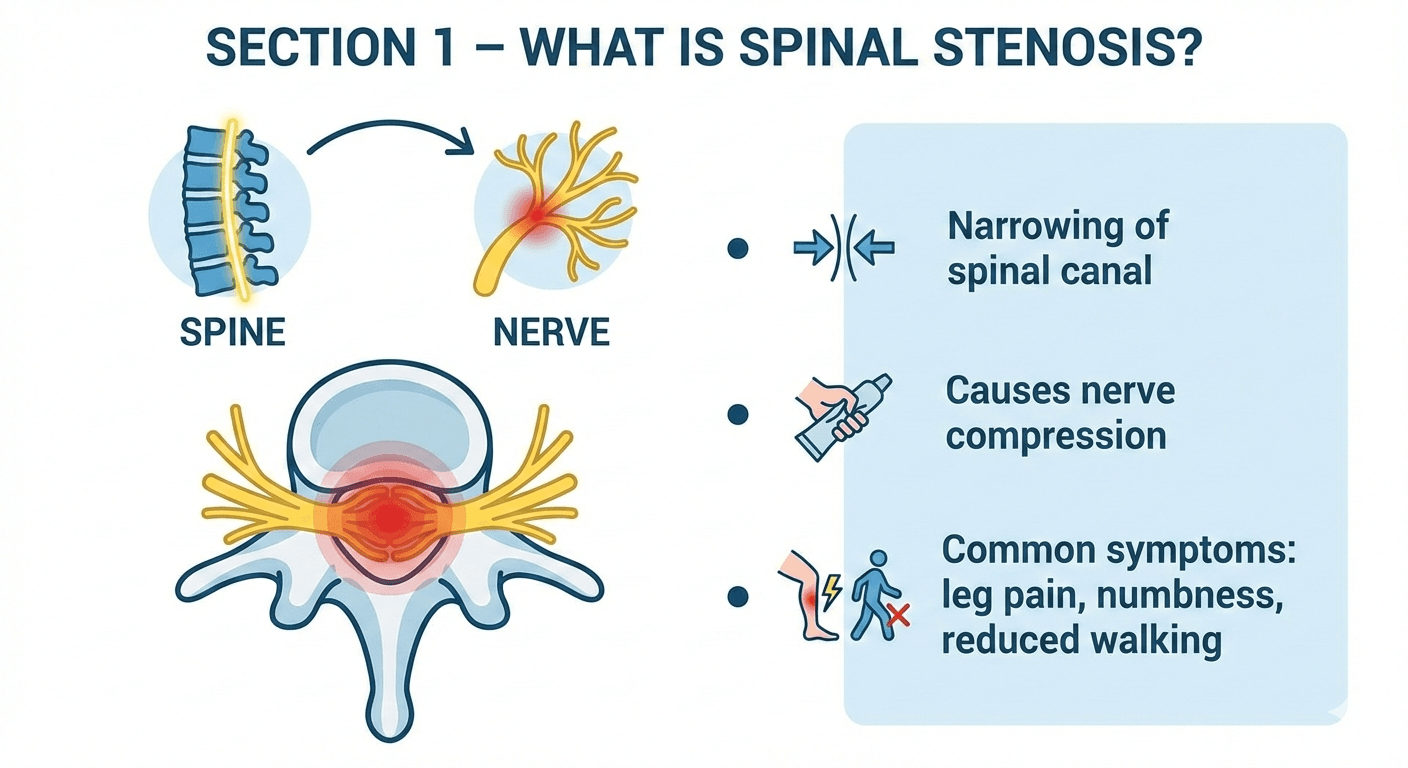
Spinal stenosis occurs when the spaces inside your spine narrow, placing pressure on the spinal cord or nerve roots. This compression reduces blood flow and irritates nerves, leading to pain, weakness, and reduced mobility. If your pain is caused by nerve compression or narrowing of the spine, choosing the best back brace for spinal stenosis can significantly improve mobility and comfort.
Types of Spinal Stenosis
Lumbar Spinal Stenosis
- Affects the lower back
- Causes leg pain, numbness, heaviness, and walking difficulty
- Most common form
Thoracic Spinal Stenosis
- Affects the mid-back
- Less common but can affect posture and breathing mechanics
Cervical Spinal Stenosis
- Affects the neck
- Can cause arm numbness, balance issues, and weakness
Common Symptoms
- Lower back pain
- Leg pain or cramping when walking
- Numbness or tingling
- Reduced walking tolerance
- Forward-leaning posture for relief
- Muscle weakness
Does Back Bracing Actually Help Spinal Stenosis?
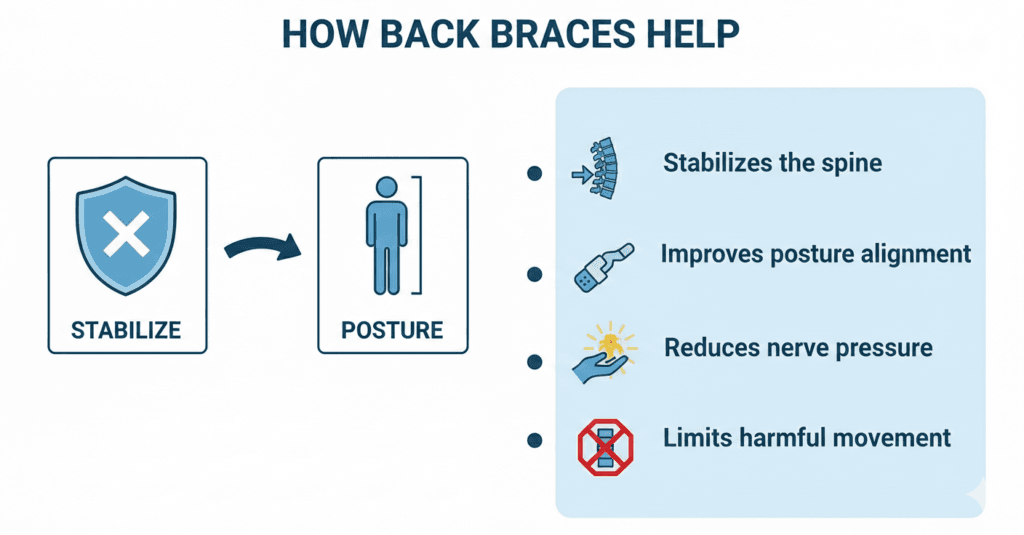
Yes — back braces are commonly used as a conservative treatment for spinal stenosis. They help by:
Reducing Nerve Compression
Braces stabilize the spine and reduce excessive movement that worsens nerve pressure.
Improving Posture
Many stenosis patients feel better when slightly flexed forward. Braces support this positioning safely.
Limiting Harmful Motion
Twisting, bending, and sudden movements can aggravate symptoms. Bracing provides controlled motion.
Supporting Muscles and Ligaments
Reduces fatigue and strain during walking, standing, and daily activity.
Bracing is especially helpful for mild to moderate stenosis, post-surgical recovery, and patients seeking non-surgical management.
What Is the Best Back Brace for Spinal Stenosis? (Top Types Explained)
Best Low-Profile Lumbar Brace (Mild Stenosis)
- Lightweight compression support
- Improves posture
- Ideal for desk work and daily activity
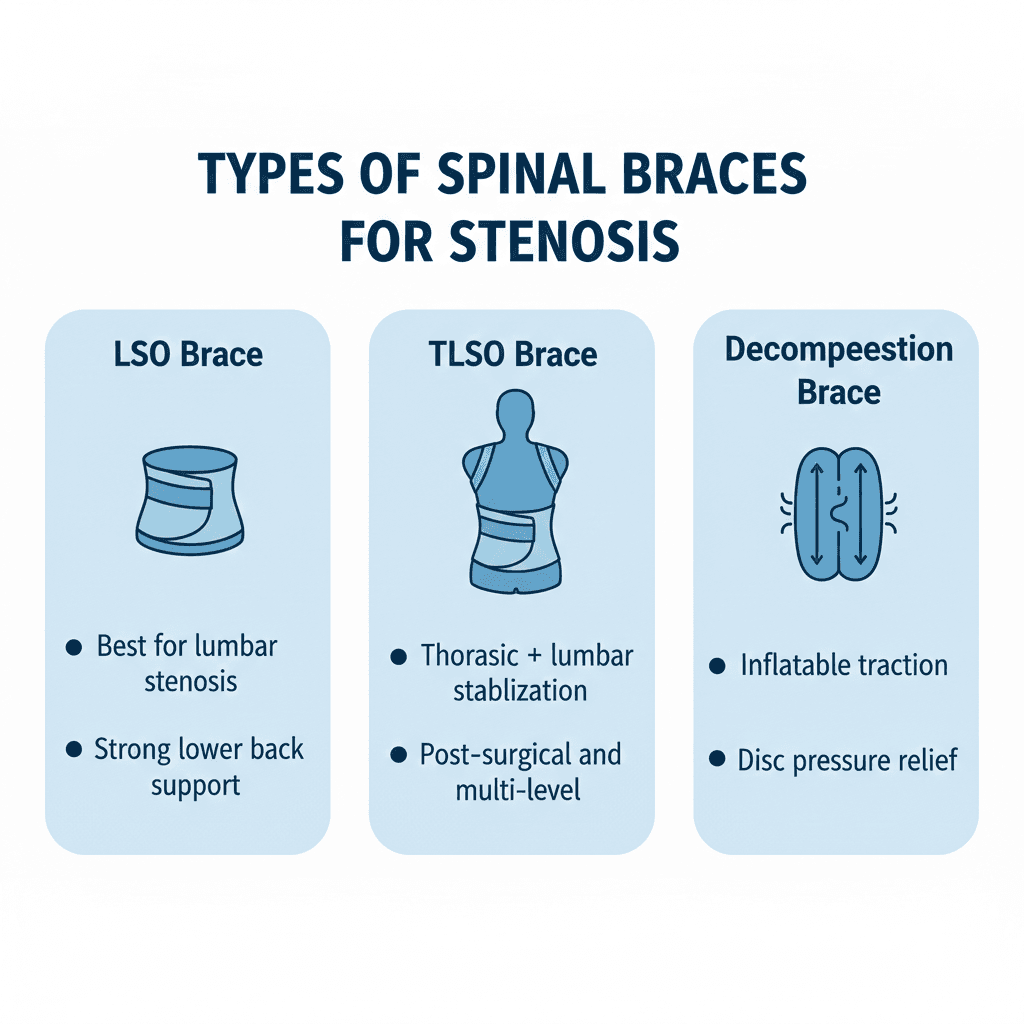
Best Rigid LSO Brace (Moderate–Severe Stenosis)
- Strong lumbar stabilization
- Limits harmful movement
- Reduces nerve compression
- Often prescribed by physicians
Best TLSO Brace (Thoracic or Multi-Level Stenosis)
- Extends support from thoracic to lumbar spine
- Used after surgery, fractures, or severe instability
If your diagnosis includes spinal narrowing or nerve compression, this spinal stenosis brace buying guide explains exactly which medical-grade brace offers the best support.
Best Decompression Back Brace
- Inflatable traction system
- Gently decompresses spinal discs
- Helps reduce nerve pressure and disc bulging
For a deeper breakdown on support levels, brace types, and Medicare eligibility, see our complete guide on how to choose a back brace for spinal stenosis.
LSO vs TLSO vs Decompression Braces: Which Is Right for You?
| Feature | LSO Brace | TLSO Brace | Decompression Brace |
|---|---|---|---|
| Support Level | Moderate–High | High | Moderate |
| Coverage | Lower back | Mid & lower back | Lumbar traction |
| Best For | Lumbar stenosis | Multi-level stenosis | Disc pressure relief |
| Mobility | Moderate | Restricted | Moderate |
| Insurance | Often covered | Often covered | Varies |
How to Choose the Right Back Brace for Spinal Stenosis
Proper Fit and Sizing
A brace must fit snugly without cutting circulation.
Adjustability
Look for adjustable compression straps.
Breathability
Important for all-day wear.
Activity Level
Choose based on whether you walk, work, or rest more.
Doctor Prescription
Required for Medicare coverage.
Conservative Treatments That Work Best with Back Bracing
Physical Therapy
Strengthens muscles and improves posture.
Heat & Cold Therapy
Reduces inflammation and muscle tension.
Medication
Short-term pain control when prescribed.
Lifestyle Adjustments
Weight management, posture correction, low-impact exercise.
Surgery (When Needed)
Reserved for severe neurological compromise.
Why Patients Choose Axis DME for Spinal Stenosis Braces
Axis DME provides:
Medical-grade LSO and TLSO braces
Medicare and insurance processing
Physician coordination
Expert fitting support
Fast nationwide shipping
Personalized patient care
Call Axis DME at +1-516-460-2868 to verify coverage and get fitted.
Frequently Asked Questions About Back Braces for Spinal Stenosis
What is the best back brace for spinal stenosis?
A rigid LSO or TLSO brace depending on severity.
Can a brace reduce nerve compression?
Yes, by stabilizing posture and limiting motion.
How long should I wear a brace?
As prescribed — typically several hours daily.
Can I walk while wearing a brace?
Yes — many patients walk more comfortably.
Does Medicare cover spinal stenosis braces?
Yes with a physician prescription.
Are decompression braces safe?
Yes when used correctly.
Can a brace prevent surgery?
In many mild to moderate cases, yes.
🎯 Final Recommendation: Choosing the Best Back Brace for Spinal Stenosis
If you’re asking what is the best back brace for spinal stenosis, the answer depends on your diagnosis, activity level, and physician recommendation.
For most patients, a medical-grade LSO or TLSO brace provides the best stability, pain relief, and insurance eligibility.
👉 Contact Axis DME today for expert guidance and Medicare verification.
📞 +1-516-460-2868
Leave a Reply